Studio FacileMade Visual
Phlebotomy study guide · US edition

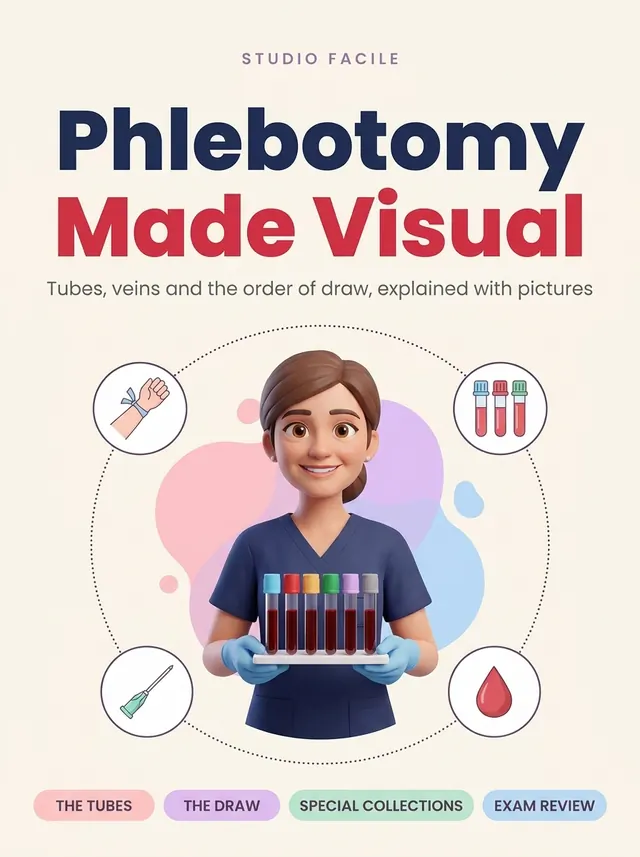
Phlebotomy Made Visual

Tubes, veins and the order of draw, explained with pictures.

52 illustrated pages, one topic per page. Plus two free bonuses: The Tube Guide and a 150-question practice test, every answer explained.

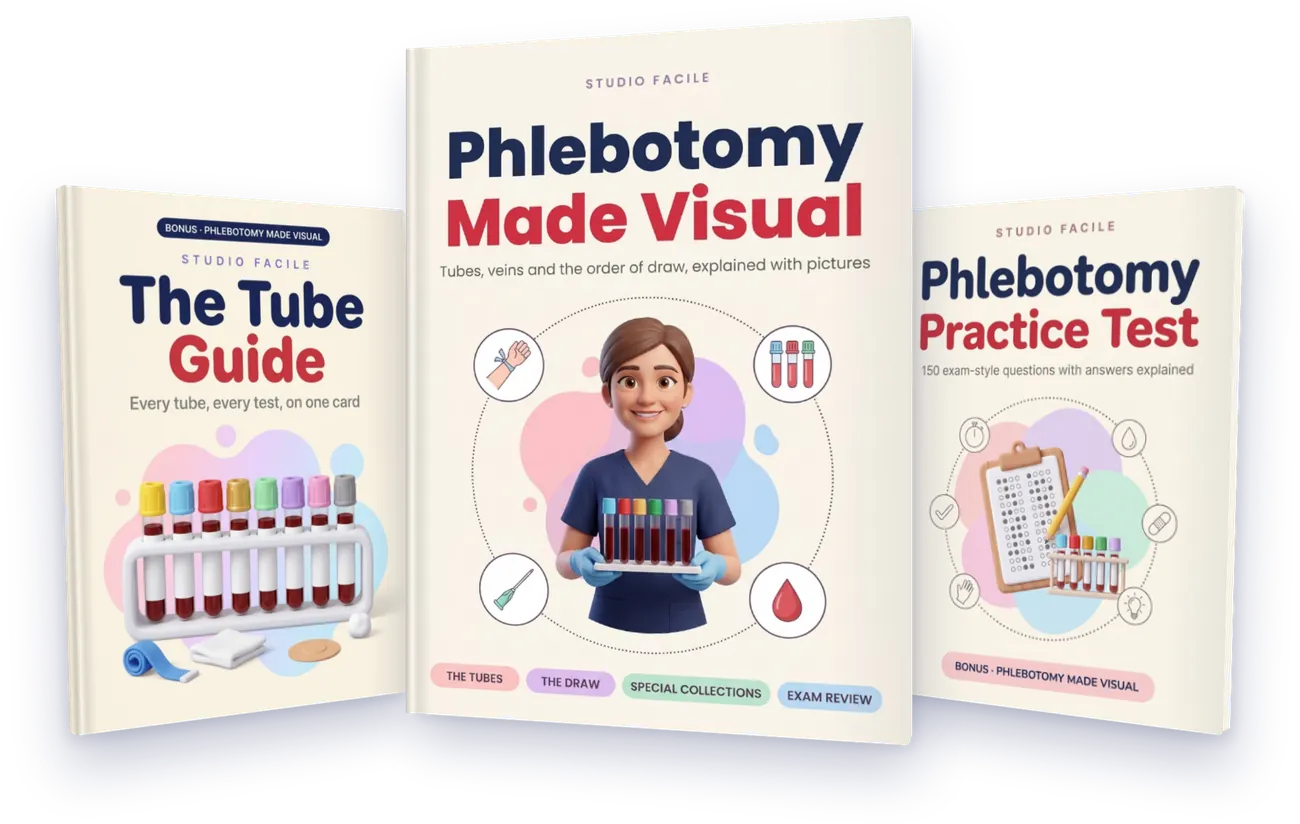
The three books: Phlebotomy Made Visual, The Tube Guide and Phlebotomy Practice Test
  • One topic per pageThe drawing carries the idea, the boxes give the rule.
  • Follows the CLSI standardsAnd common US practice. Where labs differ, the page says so.
  • Three PDFs by emailRead them on your phone, print what you need.
Get the 3 books — $27
Secure checkout Instant download 30-day refund policy
52illustrated pages,
one topic each
150practice questions,
answers explained
3PDFs: the book
+ 2 free bonuses
Look inside

This Is What a Page Actually Looks Like

Real pages from the three books. Tap any page to see it full size.

How the book works

Every Draw Rests on Three Checks

The right patient, the right tube and the right order. The book is built around them, and draws each one.

1

Right patient

Two identifiers, checked against the requisition, before any tube is touched.

Part I
2

Right tube

Each stopper color means an additive, and each additive suits certain tests.

Part II
3

Right order

Tubes are filled in a fixed sequence, so no additive passes from one tube into the next.

Parts II and III
How each page worksOne topic per page. The drawing carries the idea, the boxes give the rule, and the dark strip at the bottom holds the point most often missed on the job and on the exam.
The difference

A Chart You Memorize vs. A Page You Understand

A color chart and a list of steps

  • Stopper colors with no reason behind them
  • The order of draw as a string of words to memorize
  • No picture of the vein, the angle or where the bevel went
  • Rules that differ from source to source, with no way to tell why

Phlebotomy Made Visual

  • Each stopper explained: what is inside it and what it is for
  • The order of draw — and why the order matters (carryover)
  • The veins, the tourniquet, the angle and the bevel, drawn
  • CLSI standards and common US practice; where labs differ, it says so
The kit

One Book to Learn It. Two to Keep It.

The book teaches. The Tube Guide stays on the tray. The Practice Test tells you what to review. The two bonuses are free.

The book Phlebotomy Made Visual 52 pages · 5 parts

Phlebotomy Made Visual

Before the needle, the tubes, the draw, special collections and when things go wrong. One topic per page, from the two identifiers to the numbers to remember.

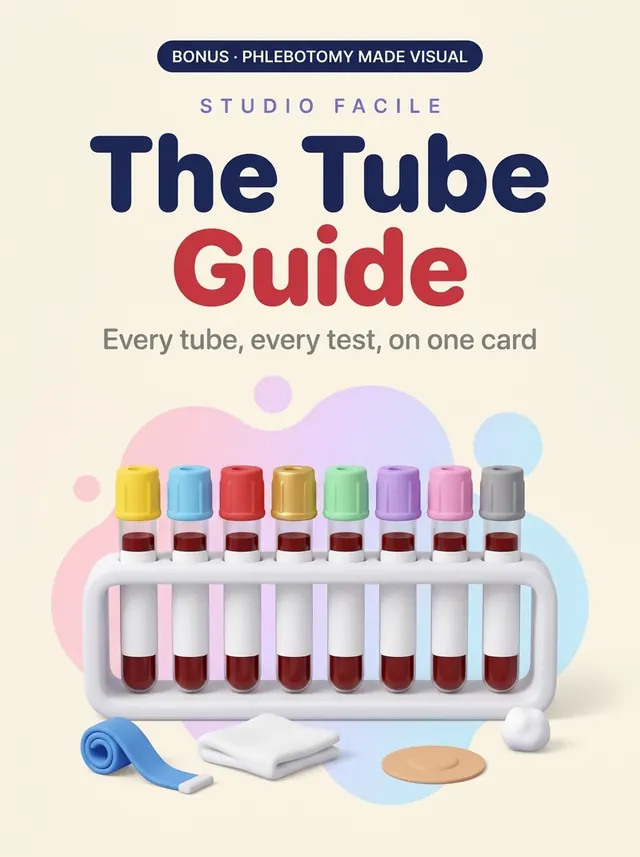
Bonus 1 · Free The Tube Guide 20 pages · made to print

The Tube Guide

Every tube, every test, on one card. One card per tube, the order of draw on one page, and an A–Z finder from test to tube. Print it and keep it on the tray.

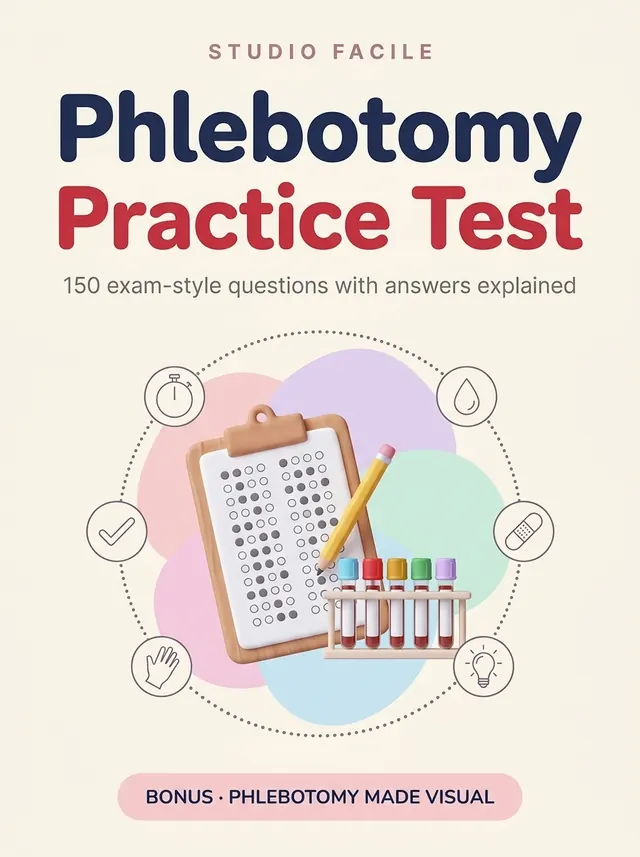
Bonus 2 · Free Phlebotomy Practice Test 22 pages · 150 questions

Phlebotomy Practice Test

150 exam-style questions in six blocks of 25, an answer sheet to print, and an answer key with one line on why for every answer — plus what to review if you missed it.

Get the kit — $27
What is inside the book

Five Parts, From the Requisition to the Lab

The real table of contents. Tap a part to see its pages.

IPart I · pp. 4–12Before the needleEverything that happens before the skin is touched
  1. What a phlebotomist does
  2. Two identifiers, every time
  3. Hand hygiene and PPE
  4. Standard precautions and needlesticks
  5. The requisition and the label
  6. The tray: everything you need
  7. Needles and gauges
  8. Tube holder, butterfly or syringe?
IIPart II · pp. 13–25The tubesWhat is inside each stopper, and the order they go in
  1. Inside a tube
  2. Serum, plasma or whole blood
  3. Light blue: sodium citrate
  4. Red: the serum tube
  5. Gold (SST): the gel separator
  6. Green: heparin
  7. Lavender: EDTA
  8. Gray: the glucose tube
  9. The other stoppers (pink, royal blue, yellow, tan)
  10. The order of draw
  11. Why the order matters (carryover)
  12. Inversions, tube by tube
IIIPart III · pp. 26–37The drawFrom choosing the vein to the bandage
  1. Where not to draw
  2. The veins of the arm (H and M patterns)
  3. Hand veins
  4. The tourniquet
  5. Cleaning the site
  6. Venipuncture step by step (1): anchor and insert
  7. Step by step (2): fill, release, withdraw
  8. Drawing with a butterfly (discard tube)
  9. Drawing with a syringe (transfer device)
  10. No blood? Fix the needle
  11. After the draw
IVPart IV · pp. 38–45Special collectionsCapillary sticks, cultures, timed and sensitive samples
  1. The fingerstick
  2. The heel stick
  3. Capillary order of draw
  4. Blood cultures
  5. Timed draws: GTT, peak and trough
  6. Ice, light, warmth: special handling
  7. Children, older adults and difficult veins
VPart V · pp. 46–52When things go wrongComplications, bad specimens and how to avoid both
  1. Hematoma and fainting
  2. Nerves and arteries: when to stop
  3. Hemolysis
  4. Errors that ruin a specimen
  5. Processing and transport
  6. Numbers to remember
For the certification exam

It Covers What the Certification Exams Ask About

The book and the Practice Test cover the topics of the common US phlebotomy certification exams. The 150 questions come in six blocks:

NHA CPTASCP PBTAMT RPTNCCT
1
Safety and Infection ControlQuestions 1–25
2
Patient ID and CommunicationQuestions 26–50
3
Equipment and TubesQuestions 51–75
4
Order of Draw and AdditivesQuestions 76–100
5
Venipuncture TechniqueQuestions 101–125
6
Special Collections and ProcessingQuestions 126–150

The questions were written for this book: they are not official exam questions, and Studio Facile is not affiliated with NHA, ASCP, AMT or NCCT. Each exam sets its own length, timing and passing standard, so check your candidate handbook.

How you use it

Read It, Keep It Close, Test Yourself

1

Read one part at a time

Five parts, in the order a draw happens: before the needle, the tubes, the draw, special collections, and when things go wrong.

2

Keep The Tube Guide on the tray

Print it. When you are not sure which tube a test needs, the A–Z finder tells you.

3

Take the test one block a day

25 questions, about 25 minutes. Aim for at least 20 of 25 in every block; the key sends each wrong answer back to its topic.

Is this for you

Who This Was Drawn For

You are in a phlebotomy program

Lectures, clinicals and a stopper chart to learn. Each topic on one illustrated page you can come back to.

Your certification exam is coming up

150 practice questions in six blocks, and an answer key that tells you what to reread when you miss one.

You draw blood as part of your job

Medical assistants, nursing and lab staff who want the tubes, the order of draw and the special collections clear, on one page each.

The offer

Everything You Get, For One Payment

Phlebotomy Made Visual · the kit

The three books
  • ✓The book: 52 illustrated pages, five parts
  • ✓Bonus 1: The Tube Guide (20 pages) Free
  • ✓Bonus 2: Practice Test, 150 questions Free
  • ✓Answer sheet to print, every answer explained Included
  • ✓Print it as often as you want Included
One payment$27 No subscription
Get the kit — $27
Secure checkout Instant download 30-day refund policy

All three PDFs arrive by email within minutes.

30
days

If something is wrong with it, you get your money back

For 30 days. If a file does not open, if what you received is not what this page describes, if you were charged twice or the download never arrived, write to us and we refund you in full.

One email to info@studiofacilebook.com is enough.

Questions

Before You Decide

Is this official exam prep?

No. It is an independent illustrated study guide. It covers the topics the national certification exams ask about — NHA CPT, ASCP PBT, AMT RPT and NCCT — but Studio Facile is not affiliated with any of those organizations, and the 150 practice questions were written for this book: they are not official exam questions. Each exam sets its own length, timing and passing standard, so check your candidate handbook.

Does it replace my phlebotomy program?

No. It is not a course, and it does not give you a certificate or clinical hours. It is the illustrated material that goes with the training you are already doing.

Which standards does it follow?

The CLSI standards and common US practice. The tube colors are BD Vacutainer’s, the most common tube line in US labs. Where laboratories differ, the page says so — and your facility’s procedure manual always has the final word.

How do I get it?

By email, straight after you buy. Three PDFs you can read on your phone, tablet or computer.

Can I print it?

Yes, as many times as you want, for yourself. The Tube Guide is made to be printed and kept on the tray, and the practice test has an answer sheet you can print and fill in.

How many pages is it?

The book has 52 pages, The Tube Guide 20 and the Practice Test 22. One topic per page.

Is it a subscription?

No. One payment of $27, and the three PDFs are yours.
One Last Thing

Every draw rests on three checks. The book draws each one, so you can see it instead of memorizing it.

Right patient.
Right tube.
Right order.

Get the 3 books — $27
All three PDFs by email in minutes